

The assumptions that shaped telecom infrastructure investment for the past two decades are being tested. Speed and capacity — for a long time the defining metrics of a well-performing network — remain important. But for operators, enterprises, and the institutions that depend on uninterrupted digital services, a different priority is moving to the top of the agenda: the ability to stay up when things go wrong.
This is not a gradual shift. It is being accelerated by recent current events.
The concentration problem
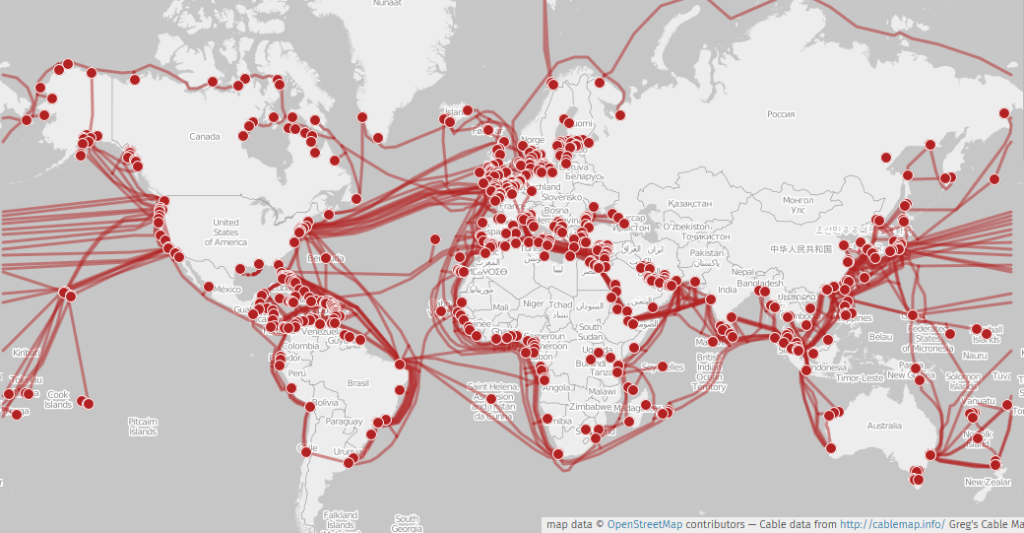
Global Internet traffic flows across a relatively small number of submarine cable corridors. These routes — connecting Europe to Asia through the Middle East, linking Africa to the rest of the world via the Red Sea and Indian Ocean — were built for efficiency. They achieve it. But efficiency and resilience are not the same thing, and the concentration of traffic into these corridors creates a structural exposure that the industry is only now fully grappling with.
When the PEACE cable suffered a critical cut in the Red Sea in early 2025 — following the AAE-1 outage just months before — the impact was felt across East Africa, the Horn, and beyond. These were not isolated incidents. Repair operations in contested or geopolitically sensitive waters can take weeks. During that time, operators carrying traffic on affected routes face real choices about continuity, rerouting, and service commitments to their customers.
The question is no longer whether disruptions will happen. It is how quickly networks can respond when they do.
Why this matters more now than it did five years ago
The dependency on always-on connectivity has deepened across every sector. Cloud services, AI-driven applications, real-time financial transactions, and enterprise operations that once tolerated short interruptions now cannot. The tolerance for downtime — even partial, even brief — has effectively reached zero in most commercial environments.
At the same time, data volumes continue to grow. The traffic that submarine cables carry today dwarfs what was anticipated when many of these systems were commissioned. This growth is not slowing. Emerging markets across Africa and South Asia are coming online at pace, adding new demand to corridors that are already under pressure.
What resilience actually means in practice
Resilience in network design is built on three interdependent principles. Understanding the distinction between them matters for anyone responsible for infrastructure planning or procurement.
Redundancy means having more than one path capable of carrying your traffic. If a cable fails, another route can absorb the load without service interruption. This sounds straightforward, but true redundancy requires spare capacity that is immediately accessible — not just theoretically available.
Diversity is about geography. Two redundant routes that share a common corridor — or a common landing station — offer far less protection than routes that are physically separated. Geographic diversity is the difference between a backup plan and a genuine alternative.
Interconnection is what makes redundancy and diversity operationally useful. Without efficient points where networks can exchange traffic and reroute dynamically, even well-designed redundant infrastructure cannot respond quickly enough to real-world events. The quality and location of interconnection hubs is therefore central to how resilient a network actually is in practice — not just on paper.
Together, these three principles define the difference between a network that is merely fast and one that can be relied upon when the underlying infrastructure is under stress.
The role of interconnection hubs
Not all cable landing points are equal. A location with a single cable terminating at a single landing station offers connectivity. A location where multiple cable systems converge, where networks can interconnect, and where traffic can be rerouted across geographically diverse paths offers something more: flexibility under pressure.
This distinction is becoming central to how operators evaluate where to route traffic and where to invest. The value of an interconnection hub is no longer measured only by the capacity it provides in normal operating conditions. It is measured by what it enables when normal conditions no longer apply.
Djibouti’s position in this context
Djibouti’s geographic location — at the southern entrance to the Red Sea, along the Bab al-Mandeb corridor — places it at one of the most strategically significant points in global connectivity. What Djibouti offers in this environment is not simply cable landing capacity. It is a concentration of diverse, internationally significant cable systems — connecting Africa, Europe, the Middle East, and Asia — within a single hub that provides genuine route optionality. When a cable on one corridor goes down, the ability to reroute across a different system, terminating at the same hub, is what keeps traffic moving.
This is the practical difference between a capacity hub and a resilience hub. The former measures itself by throughput. The latter measures itself by what it can maintain when throughput is threatened.
What operators should be asking
For network planners and operators reviewing their routing strategies, the resilience conversation comes down to a few concrete questions. Does your traffic depend on a single corridor or a single cable? What is your rerouting capability in the event of an unplanned outage — and how quickly can it be activated? Are your redundant paths genuinely diverse, or do they share physical infrastructure at some point along the route?
These are not new questions. But the events of the past few months have given them a new urgency, and the answers organisations gave themselves two or three years ago may no longer be sufficient.
Looking ahead
The trajectory of investment in submarine cable infrastructure points in one direction: more cables, more routes, more interconnection. But the value of that investment depends heavily on where it terminates and how it interconnects with other systems.
The networks that will define the next phase of global connectivity are those designed from the outset with route diversity and continuity in mind. Speed and capacity will remain important. They always will be. But the ability to maintain service when the underlying infrastructure fails — to reroute, to absorb, to keep going — is what separates infrastructure that organisations can genuinely rely on from infrastructure that simply performs well in good conditions.
That distinction is no longer theoretical. It is being tested in real time.
To learn more about Djibouti Telecom’s international cable infrastructure and interconnection services, visit our Network page or contact the team.